Recurring joint pain can be frustrating because symptoms may disappear for several days and return after exercise, work, travel or routine activity. Repeatedly relying on temporary pain relief without understanding the cause can make it difficult to know whether the problem is minor, mechanical or part of a condition requiring further treatment.
General Orthopaedic Care provides a starting point for evaluating musculoskeletal problems involving bones, joints, muscles, tendons and ligaments.
For residents of Pimple Nilakh and nearby Pune neighbourhoods in Maharashtra, knowing when to arrange an assessment can prevent persistent symptoms from becoming an accepted part of everyday life.
Start With the Pattern of Pain
The same joint can hurt for very different reasons.
Pain after an injury has a different clinical context from stiffness that has developed gradually over months. Similarly, pain occurring only during a particular movement may require a different evaluation from continuous discomfort.
Before an appointment, it can be useful to notice:
- Where the pain is located
- When it started
- Whether an injury occurred
- Which activities trigger symptoms
- Whether swelling develops
- Whether the joint locks or gives way
- How long morning stiffness lasts
- Whether movement has become restricted
These details can provide useful clues during assessment.
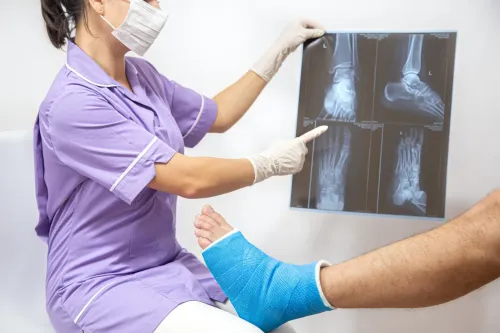
Avoid Treating the X-Ray Instead of the Patient
Imaging is valuable, but an X-ray or scan is only one part of orthopaedic evaluation.
Some imaging changes may not fully explain a person’s symptoms, while certain soft-tissue injuries require a different type of investigation. A clinician therefore considers medical history, physical examination and imaging together.
The appropriate investigation depends on the suspected condition.
Conservative Care Is Often the First Step
Many musculoskeletal problems do not require surgery.
Depending on the diagnosis, initial management may include medication, physiotherapy, temporary activity modification, strengthening, mobility work, ergonomic changes or other condition-specific measures.
The important point is that treatment should match the cause.
For example, repeatedly resting a joint without addressing muscle weakness may not solve one problem, while continuing high-impact exercise through an acute injury may aggravate another.
Know When Reassessment Is Needed
Persistent swelling, reduced range of motion, recurrent instability, worsening pain or difficulty bearing weight deserves attention. Symptoms following significant trauma also require timely evaluation.
At Ayush Orthopaedic Clinic, general orthopaedic assessment can help people in Pimple Nilakh determine whether recurring joint or musculoskeletal symptoms need conservative care, further investigation or specialist treatment.
Rather than waiting until pain becomes severe, consider how the problem is affecting function. If you are repeatedly modifying the way you walk, work, exercise or sleep because of discomfort, an orthopaedic evaluation can help establish what is actually happening and what the next stage of care should involve.
Keywords