Technology can influence healthcare decisions, particularly when terms such as robotic surgery are associated with advanced treatment. Yet choosing Robotic Joint Replacement should involve more than selecting a procedure because it sounds newer. Patients need to understand their diagnosis, whether replacement is genuinely indicated and how robotic assistance fits into the surgeon’s treatment plan.
For families in Kalewadi and neighbouring parts of Pimpri Chinchwad, Maharashtra, a structured consultation can help separate useful clinical information from assumptions about technology.
First Ask Whether You Need Joint Replacement
This should come before questions about robotic or conventional techniques.
Joint pain can occur at different stages of disease. Some patients can continue with conservative management, while others have advanced structural damage accompanied by significant pain and functional limitation.
Useful questions include:
- What is causing my joint pain?
- How advanced is the damage?
- What non-surgical treatments remain appropriate?
- Why is replacement being considered now?
- What happens if surgery is postponed?
A clear diagnosis makes the discussion about surgical technique more meaningful.
Ask What the Robotic System Actually Does
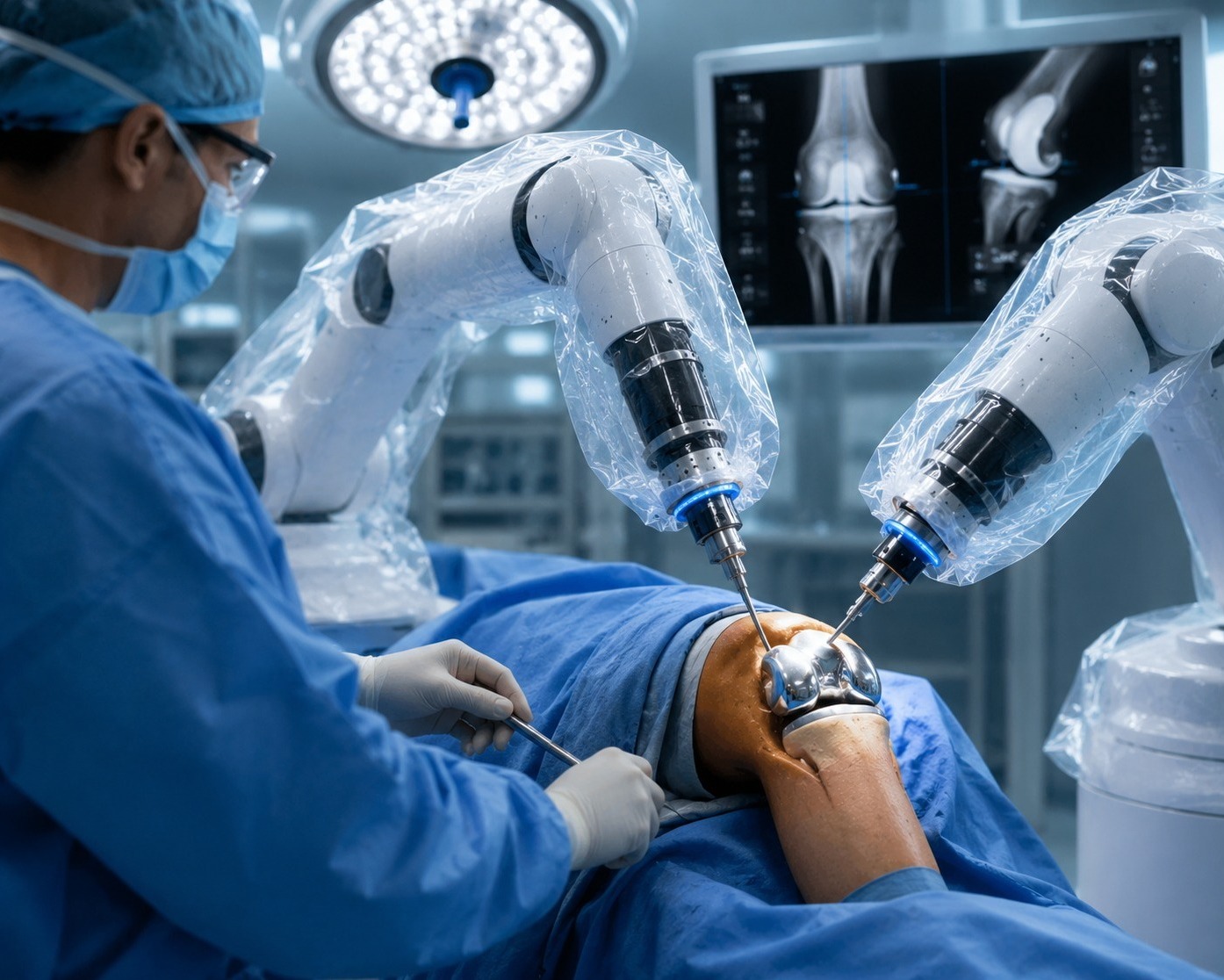
Robotic platforms vary. Patients should understand how the system being proposed assists the surgeon.
Depending on the technology, robotic assistance may support preoperative or intraoperative planning, bone preparation and implant positioning. The surgeon continues to control and oversee the operation.
Ask which parts of the procedure use robotic guidance and why the surgeon considers that assistance useful for your particular joint.
Discuss Recovery, Not Just Surgery
A technically successful operation is only part of the treatment journey.
Patients should discuss:
- Expected hospital stay
- Pain management
- When walking typically begins
- Physiotherapy requirements
- Home support after discharge
- Return to routine activities
- Follow-up schedule
- Individual precautions
Recovery timelines vary, so broad claims about exceptionally rapid recovery should not replace individual medical guidance.
Experience and Patient Selection Still Matter
Technology does not remove the need for sound clinical judgement. Appropriate diagnosis, surgical planning, implant selection, operative technique and rehabilitation all influence the overall treatment process.
When consulting Ayush Orthopaedic Clinic for joint problems around Kalewadi and PCMC, patients can discuss whether their symptoms and imaging findings justify consideration of replacement and what surgical options may be suitable.
Robotic joint replacement should ultimately be viewed as a surgical tool rather than a promise of a particular outcome. A useful consultation explains both the technology and its limitations.
Patients who understand why surgery is recommended, how the planned procedure works and what recovery requires are better equipped to participate in treatment decisions based on their condition rather than choosing solely on the basis of a technology label.
Keywords