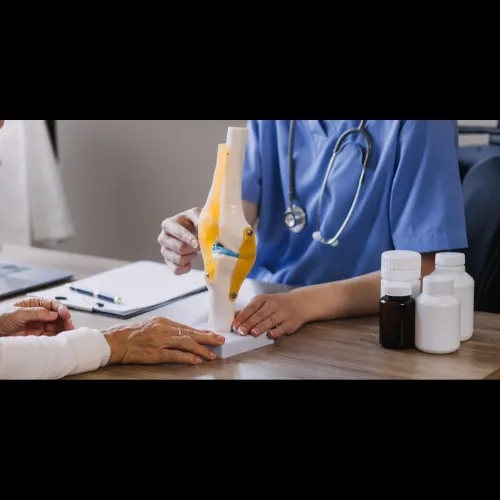
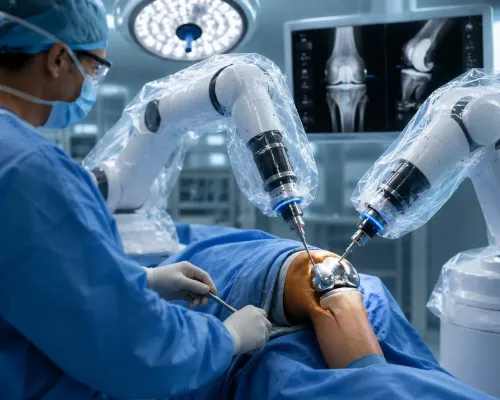
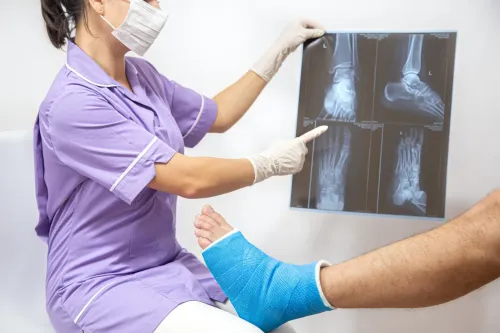
A sudden twist while playing football, an awkward landing after a jump or a road accident can injure the ligaments that stabilise the knee. Some ligament injuries improve with structured rehabilitation, while others may require surgical management when instability continues or the injury is more complex. Arthroscopic Ligament Repair is one approach an orthopaedic surgeon may consider depending on the ligament involved and the nature of the damage.
For active adults and sports enthusiasts in Pimpri Chinchwad, Maharashtra, recognising knee instability early can help prevent repeated episodes of the knee giving way.
What Happens When a Knee Ligament Is Injured?
Ligaments connect bones and help control joint stability. The knee contains several important ligaments, including the anterior cruciate ligament, posterior cruciate ligament and collateral ligaments.
An injury can range from a mild sprain to a complete tear.
Common symptoms may include:
- A popping sensation at the time of injury
- Rapid swelling
- Pain while putting weight on the leg
- Restricted knee movement
- A feeling that the knee is unstable
- Difficulty returning to sports
- Repeated episodes of the knee giving way
Symptoms alone cannot determine which ligament has been injured or how severe the injury is.
Where Does Arthroscopy Fit Into Treatment?
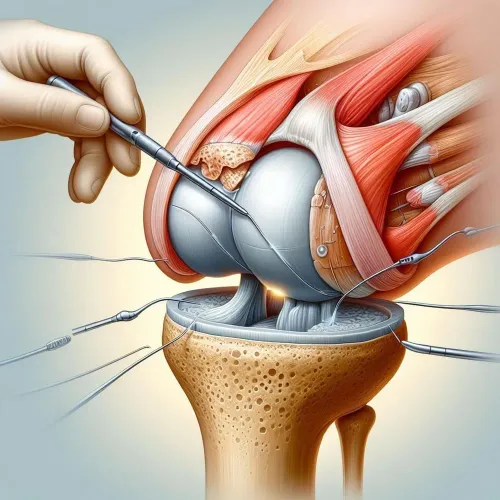
Arthroscopy is a minimally invasive surgical technique in which a small camera is introduced into the joint through a small incision. It allows the surgeon to inspect structures inside the knee and perform selected procedures using specialised instruments.
Depending on the injury, surgical treatment may involve ligament repair or reconstruction. These terms are not interchangeable. Some damaged ligaments can be repaired in selected situations, whereas other injuries may require reconstruction using a graft.
The choice depends on factors such as the ligament involved, location and pattern of the tear, time since injury, associated damage and the patient’s activity requirements.
Does Every Ligament Injury Need Surgery?
No. Many ligament injuries can be treated without an operation.
An orthopaedic evaluation may consider:
- Severity of the ligament injury
- Degree of knee instability
- Associated meniscus or cartilage injuries
- Patient age and activity level
- Sporting or occupational demands
- Response to rehabilitation
Physiotherapy is often an important part of both conservative and surgical treatment.
Why Repeated Instability Should Be Assessed
Returning to demanding activity before the knee has regained adequate stability and strength can result in another episode of giving way. Recurrent instability can also make sports participation and physically demanding work difficult.
At Ayush Orthopaedic Clinic, knee injuries can be evaluated clinically and with appropriate imaging when indicated before deciding whether rehabilitation, observation or surgical treatment needs consideration.
For patients across Pimpri Chinchwad looking into arthroscopic ligament repair, early assessment is particularly useful when swelling, instability or restricted movement persists after an injury. The objective is to identify the damaged structures accurately and select treatment according to the actual injury rather than the intensity of pain alone.
Keywords